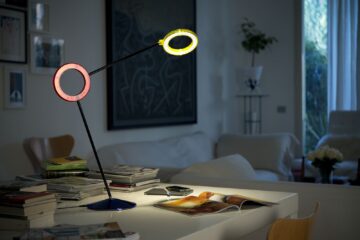
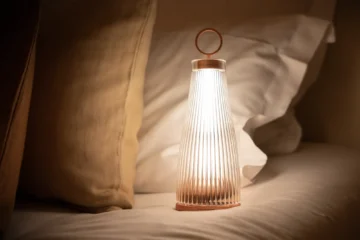
Light is not just something you switch on. Your eyes live with it for hours every day. That is the idea behind Alessandro Mendini’s lamps for RAMUN: ideal light for your eyes.
It is a big promise, so what backs it up? Part of the answer is a document most buyers never ask for: a photobiological safety certificate.
What «photobiological safety» means
Photobiological safety looks at what light can do to your skin and your eyes over time. Not sunlight: the lamp on your desk or nightstand. Every light source emits energy. If it is strong enough, or you are exposed long enough, that energy can damage the retina and the skin.
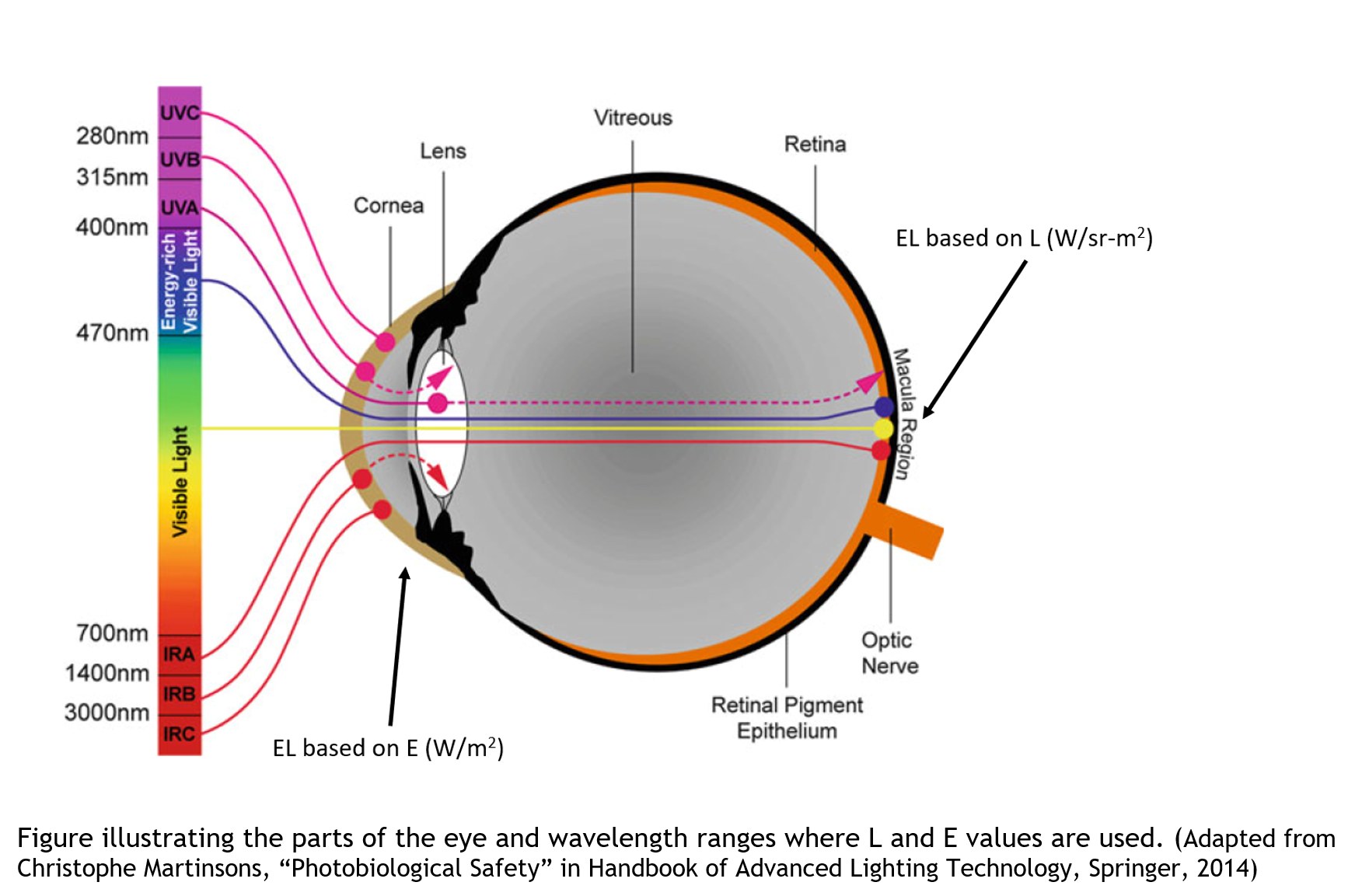
Old-style bulbs (incandescent, halogen) were rarely a concern, because their light spreads fairly evenly across the spectrum. LEDs are different. Most white LEDs pair a blue chip with a coating that converts part of that blue into other colors. The result is a spike of energy in the blue range, which is exactly where your eyes filter worst. That is what people call the blue light hazard.
The standard behind the certificate: IEC 62471
IEC 62471 is the international standard that turns this concern into something measurable. It sets exposure limits, a standard way to measure them, and a system to classify lamps by risk. It covers everything from UV to infrared, for any lamp or luminaire that is not a laser. In Europe the same standard is published as EN 62471.
A lamp is not simply «pass» or «fail». It is sorted into a risk group based on laboratory measurements, normally carried out by specialised testing bodies such as Nemko, not by the manufacturer itself.
The four risk groups, in plain terms
- RG0 (Exempt). No real risk, even after hours of looking straight at the light. Most good indoor lighting falls here.
- RG1 (Low risk). Safe under normal use. You would naturally look away or blink before any harm.
- RG2 (Moderate risk). Only risky if you stare at it. Requires a warning label.
- RG3 (High risk). Risky even briefly. Not found in home or office lighting.
Warning labels start at RG2. So a lamp without a warning sticker is not necessarily RG0: it could be RG1. The only way to know is the test report.
Why it matters more for a desk lamp than for a streetlight
What counts is distance and time. A streetlight is meters away. A desk lamp or bedside lamp is not: you may sit next to it for hours, every day. That is the situation IEC 62471 was designed for, which is why testing matters far more for the lamps you use up close than for those that simply light a room.
RAMUN’s photobiological safety certification
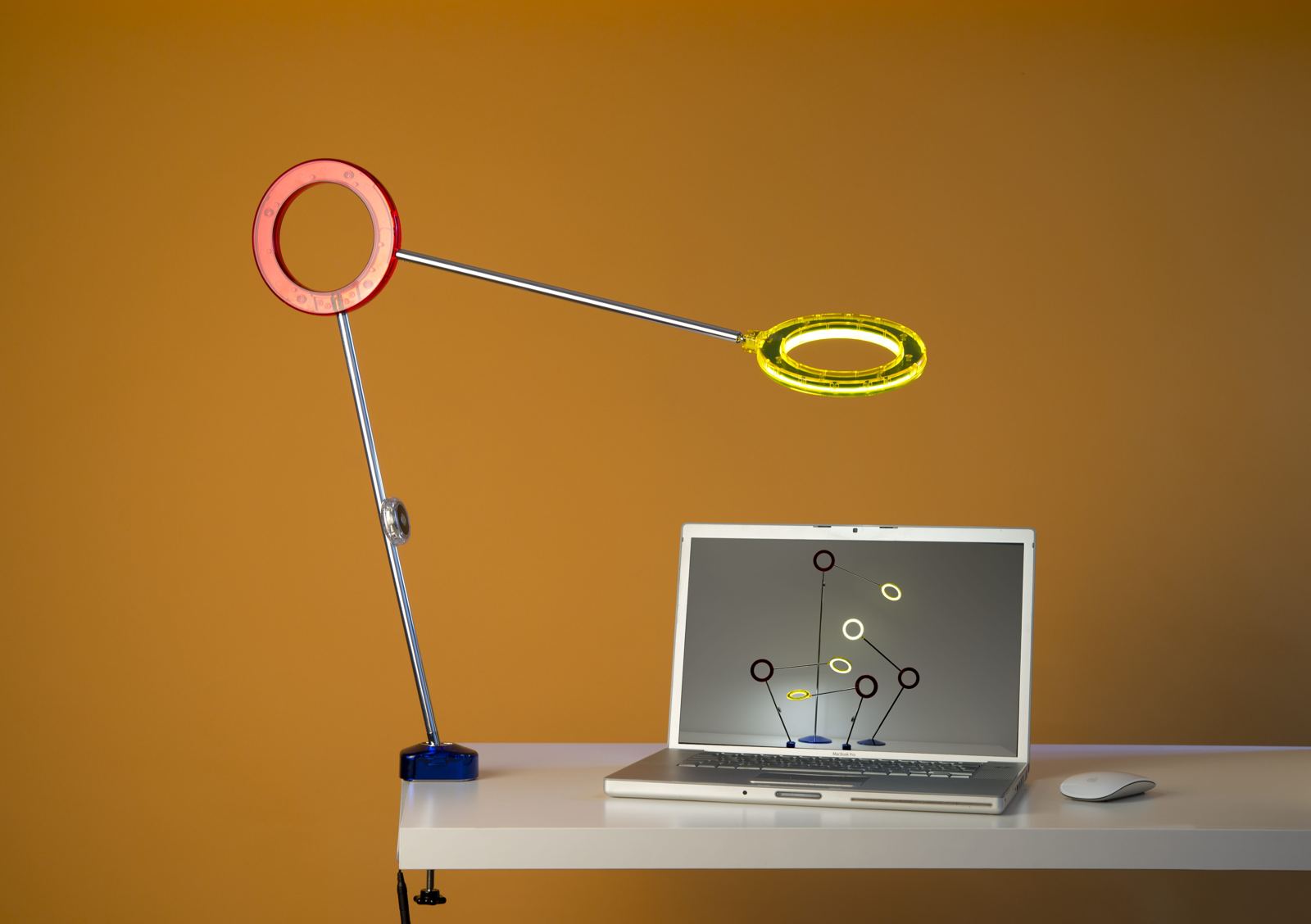
RAMUN lamps have been assessed against this standard, which measures how the light can affect eyes and skin, and RAMUN holds photobiological safety certification as a result.
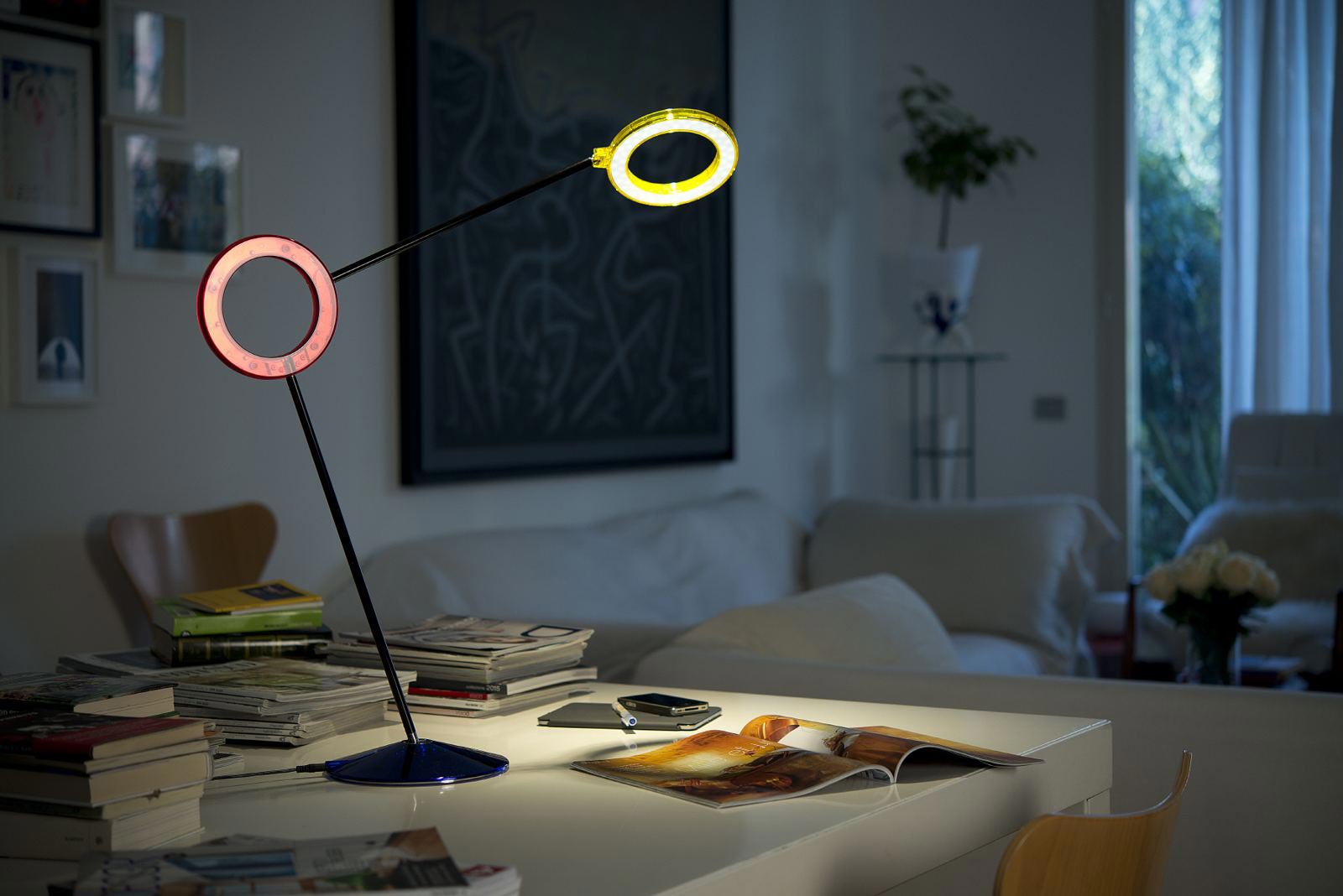
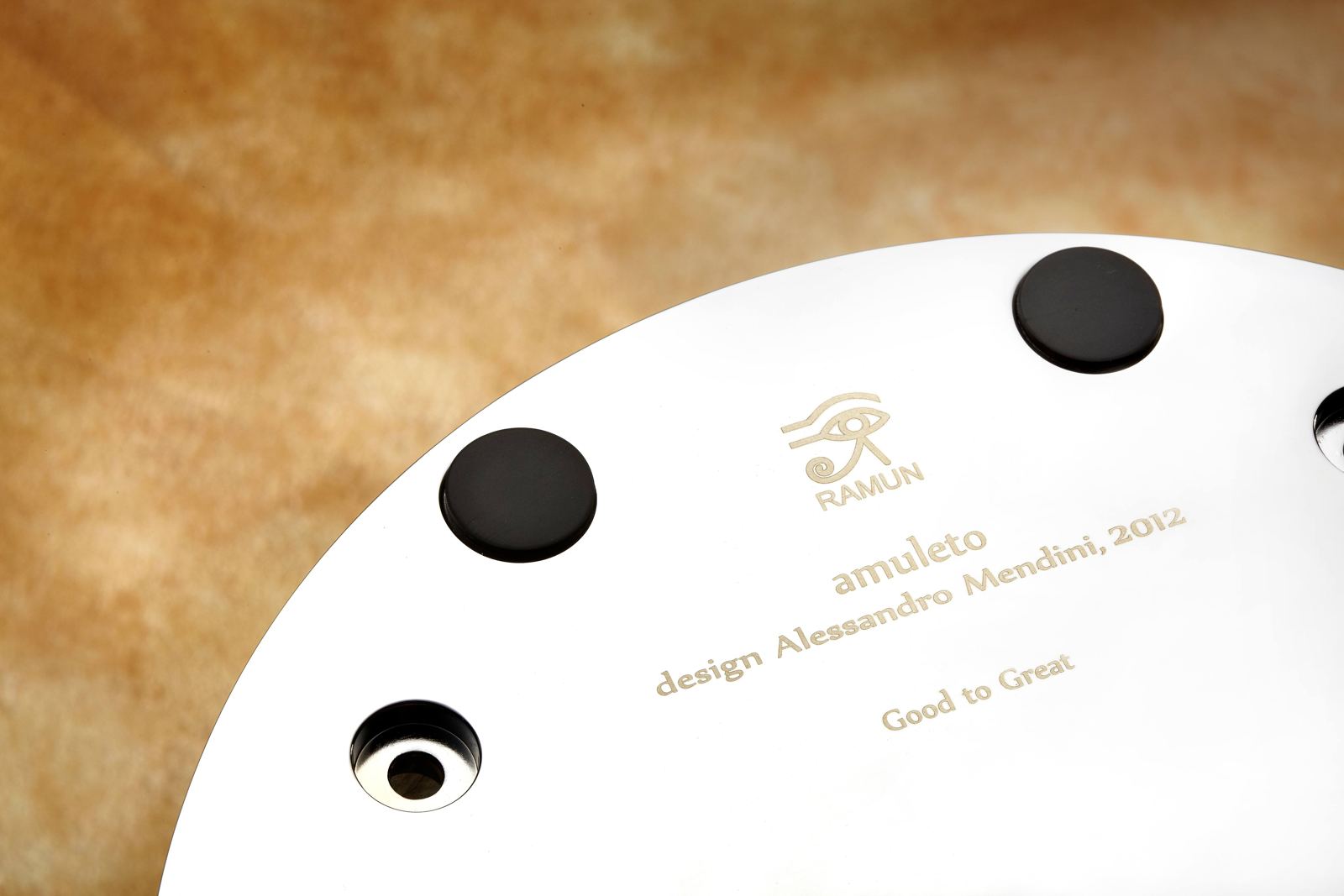
Amuleto, RAMUN’s founding lamp, was designed by Alessandro Mendini and inspired by surgical lighting. It offers 51 dimming levels, so the same precision behind the safety assessment carries over into how finely you can adjust the light. You can read more on RAMUN’s brand story page.
For a brand built around eye comfort, the certificate is not paperwork. It is the proof behind the promise. A lamp can look and feel comfortable without being safe by this standard. The certificate closes that gap.
What to check when buying any LED lamp
- Ask for the actual risk group, not just a general «it is safe» claim.
- Do not assume no warning label means RG0. Only the test report tells you.
- For anything close to your eyes for long periods, look for RG0 or RG1.
- «Warm white» is not the same as «safe». They are related, but they are not the same measurement.
Choosing a lamp for your desk? Read how to choose a design lamp for an office or premium space.
See it in person
In Barcelona, you can see RAMUN lamps switched on at Etna Studio’s showroom, Copèrnic 15.
Frequently asked questions
What is a photobiological safety certificate?
It shows that a lamp has been tested under IEC 62471 (EN 62471 in Europe) and placed in a risk group based on how its light can affect your eyes and skin in normal use.
Is this the same as «blue light filtering»?
No. Blue light is one of several things the standard checks, along with UV and infrared radiation. A lamp can be safe under this standard without any special filter. It depends on how the light source itself is built.
Do all LED lamps need this certificate?
LED lamps sold in the EU are expected to be assessed for photobiological safety, and RG2 or higher calls for a warning label. In practice, how carefully brands test, and how open they are about it, varies a lot. It is worth asking.